Wednesday, 22 May 2013

G-Day?

Today, the 22nd of May is our 'G-Day', the first day that any goslings were likely to hatch. So far no sign of any activity but I am told that, as happened with the chickens, they can have hatched but be kept a secret by their Mum for a couple of days - you might see and hear nothing. I have crept in and sat very quietly and listened but there are no new noises. Ah well, we are nothing if not patient, so we are leaving them well alone and allowing Nature to take its chosen course. Our friend Carolyn, just down the road, has had 6 goslings from 6 eggs 2 days ago, so we are a bit envious. We are also told that our problem of failing to separate the girls and allowing the egg 'borrowing' to occur might evolve into arguments over the new babies. This can go badly wrong for the babies, as you can imagine, but we are clinging to the belief that it's a bit late to separate anybody now, and that these two sisters have been nothing but amiable and nice to each other for the 4 weeks of sitting, so might just carry that into Auntie-hood.

Meanwhile our suspected barren hen, 'Baldy' gets a reprieve. The stock pot is back in the cupboard. She laid an egg! Fair play to her. She laid another this morning, so we hope she is back on line. Mind you we have not yet had that 3-egg (100% productivity) day  as one of the other girls took a break. You should always listen to your known experts - Mentor Anne said all along that William would not be 'treading' Baldy (and making her bald) if she was infertile.

The chicks are now at 4 weeks and have that amusing, half feathered, 'threadbare' look where you can see their reptilian ancestry shining through. Looking and strutting about like mini velociraptors and having all the experts having a punt on sexing them, which is notoriously difficult. Are tails up or straight backward? Is that a bit of a comb forming above the beak? Mentor Anne is going for 4 and 4, 2 roosters, 2 pullets among the buffs, my Sussex a pullet, The La Bresse cross a rooster and one of each in the Jersey Giants. Place your bets, ladies and gents.... the wheel is in spin!

In the orchard the apple blossom is just now starting to open so it is at that dark pink stage where only the backs of petals are visible. These are only young trees so we are pleased to have any blossom and we are not expecting any fruit. When the wind is less fierce we are getting a fair few bumble bees coming through now and the odd hover fly. I have not seen any honey bees and Anne tells me that Irish Bee Keepers are reporting 76% hive loss this winter on account of the hard weather. We'll see this year as the year in which the new trees got established and hope for a sensible season in 2014.

Diversifying our orchard a wee bit, we found in a local Garden Centre, and planted a hazel nut tree. The fruit tree layout was originally going to by 4 rows of 5 trees but we found that there was room for a 6th row at the north end, still giving clearance to the hedge line. I will do a line of nuts and other non top-fruit along here where their bushy shape will not detract from the plan to be able to look down avenues of blossom across the neat goose-grazed grass. Everything in its place? We had intended to get some hazel and nut trees from the 'Million Trees' project but it all seems to have gone a bit quiet in that department and the latest email update had them including escape clauses like 'trees will be made available as funds are obtained'. Reading between the lines it seems to have stalled and run out of money and trees. Ah well, the 27 we planted here are now breaking bud. We gather 'they' managed about 100,000 on the day which is, at least, 100,000 trees in the Irish landscape which would not be there but for the programme.

In the 'allotment' things are looking pleasingly weed free. We have decided to attack the enormous task of weeding in the same way I do pond digging - trying to achieve an hour every day, which translates into 2 big 'Curver' buckets onto the compost. Nearest to you in the picture is last year's rainbow chard which has amazed us by not bolting away to flower and is continuing to give us good yields. I have now got peas, broad beans, 2 kinds of artichoke and 3 of potatoes breaking the surface plus lines of smaller seedlings which I need to protect from the hens dust-bathing games.

Finally, with the grass growing like billy-oh and us not yet ready with multiple-gosling lawn mowers I have had to fire up the lawn mower to stop it all getting away. Carolyn has now sold the 4th horse (a 'big' ( i.e. normal sized) Irish Cob called Sam) so she was able to drop by yesterday with a third lunge rein, one each for 'our' three miniature horses. I was therefore able to 'deploy' my three mini-horse mowers today on the three reins , 2 in the Primrose Path and one on the front lawn under the trees where I daren't mow for fear of cutting into tree roots. We needed 3 reins because the three horses fret if they can't see one another and mess about trying to gallop up and down rather than settling down to eat the grass as intended. You can't just take 2 out mowing and leave the 3rd in the field. It was fun and games this morning in Liz's absence, trying to get 3 head collars onto 3 horses and then get them all tethered. I am not an experienced horse-manager and I think they spotted that!

Sunday, 19 May 2013

JD Bob's ponds

We know it rains a bit round here but we were still surprised at how quickly the 1010 litre rainwater tank has filled up. You can see here that we are now above the top metal frame bar so we are well up in the 900 litres area. Resurrecting some skool maths I have calculated that given that the 'catchment' is the car port roof at approx 5 m by 6 m, 1.3 inches (in old money) of rain has fallen in the last ten days, since we installed the tank. For those not versed in such matters, the rain in an average year here is about 40 inches, so this would be about a right for the 10 days. Bodes well for us being able to keep the pond topped up when we need to, doesn't it?

The newest Rabbit, Goldie, continues to thrive and is scarfing the good Roscommon grass to the manor born. This is a nice picture to give you some idea of the size of her - we are looking through 2 inch chicken wire here. Not a small animal. We are hoping for plenty of 'kittens' from her in mid June and in particular we hope there is a nice buck for keeping to mate with Ginny and Padfoot in the future. Goldie, if I have not already said so, is a Flemish Giant cross Californian White. These varieties do not stick to their colours too well, so we are told the babies can be pretty much any rabbit colour. There can be up to 15 kittens but the usual rules apply - you are wise not to even LOOK into the nest till they might be 2 weeks old, or the doe may kill and eat the babies under stress. They are born pink, hairless, blind and with their ears sealed up. By 2 weeks they are furry and cute, miniature bunnies. We are hoping for a successful 'kindling' both for her and for Ginny and Padfoot. It will be Ginny's first time.

We have been down to John Deere Bob's bank field for a look at the pond(s) we plan to do the newt surveys on. I knew where the first pond was. We took the dogs down there for a walk and they were pulling around so much, eager to race around the grass around the bigger Lough Feigh, that we risked letting them off the leads so that we could gaze at the first pond in peace. We saw small fish. We did not see any newts but that's OK; in really clear water newts are sometimes nocturnal, so you need to come back at dusk with torches. However, the dogs ran off into some bushes and we got a bit concerned after a while and Liz went a-hunting and discovered to our delight a second and much more promising pond.

This pond is more full of vegetation including many species we might have to blag bits of to start our own pond - marsh marigolds, floating water plantain, amphibious bistort and so on. It has much less open water and we could see no signs of fish. Fish are predators on newts and newt tadpoles so that, in general, you do not get newts if you have fish. (Note to you pond makers out there - if you want to create a wildlife pond, avoid the temptation to go buy goldfish!). We did not see any newts in this one either but we resolved to return without dogs and with plastic sacks to sit on and maybe even a picnic. It really was an idyllic, beautiful, peaceful place. We are going to enjoy newt surveying there.

 We are homing in now on the first possible gosling hatch date. This is the 22nd and it is a tense, nervous time. The baby chicks (who hatched the day the geese went broody) are coming up to 4 weeks old too, of course, and getting well feathered and starting to look too big for the run. Broody Betty is also looking quite keen to get out and show them around. We are still a bit nervous that they are very small and might fall prey to the cats or a magpie, but Gander, bored by his women having been sitting now for 3 and a half weeks is currently hanging around near them and shouts at any passing crows or 'maggies'. He also scares off the cats. It will be interesting to see how this dynamic changes when (Please, God) we get some goslings for him to look after and he gets his ladies back. Our plan (frantically NOT counting chickens here) would be to keep all the geese then in the orchard field during the daytime so that we get that grass a bit grazed and to shepherd them back and forth to the secure house at night. Of course we are aware that this might all go wrong and we get failed clutches and no babies. These are very young and inexperienced mothers and although we've seen them do what we think is a successful incubation, we are by no means out of the woods. Wish us luck and hopefully by next weekend we will be singing (and honking) a happy song.

Wednesday, 15 May 2013

We saw a Sparrow!!!!

OK, probably not the most exciting subject for a blog post, especially for my UK readers where the good old common or garden House Sparrow (Passer domesticus) is as common as muck. In our garden in Kent, where we did the 'wildlife garden' bit and fed them all year round, we had a resident population of between 35 and 75 cheeping from the holly bush and beech hedge, hanging around the feeders and nesting in at least 2 of the sections of our 'sparrow terrace' nest box. Like you, probably, we thought nothing of it. If you fed the wild birds, sparrows was what you always got and you hoped for the other species as well.

When we moved to the West of Ireland one of the first wildlife-related things that struck us, as we lived those early months in the caravan was the lack of sparrows. Not a one. Now we know that Ireland famously does not have snakes and, now trained on newts, we know that the island lacks several UK species of amphibian (allegedly the Common Toad, Palmate Newt and Great Crested Newt among others). It lacks all manner of mammal species which is understood to be an effect of the retreating ice age ice-sheet and species struggling to migrate north before the land bridges were submerged by melt water sea-level rises, for example moles, various rodents, wild cats and several deer. There are also many differences in flora and invertebrate lists.


Our caravan bird-neighbours were much more abundant populations of birds which were not common in Kent - chaffinches seemed to fill the sparrow niche, so that we have had a regular 15-17 permanently on site polishing off spilled chicken feed. Coal tits were common, though that seems to be a winter thing. We have 5-7 robins always around and wrens are also common. The common UK carrion-crow is replaced in Ireland by the grey bodied Hooded Crow. We have also since learned that some of the species that do live here 'do not get this far over' (to the west); apparently Short-Eared Owls do not live in Co Roscommon.

It was almost a year of living here before we saw a sparrow, and that in the yard of a local agricultural feeds supplier. We guessed that they are in fact 'here' but that because this is a beef farming area without the arable grain harvest and storage and where very few people feed wild birds. We have since seen them very rarely in other grain store areas but it was on 7th May, just a week ago, that Liz spotted 2 around our hay barn and shouted, "That's a Sparrow!". She was right - there were actually a pair and we were both grinning like loons, happy to have 'our old friends' back. I have since seen both a couple more times, so we are going to declare them resident. We do have sparrows!

Tuesday, 14 May 2013

I Named that Statue. Minute that!

One of the things I have always loved about the Irish is the way that they adopt amusing, irreverent nicknames for their statues, street art and landmarks, notably in the capital, Dublin. A rather boobalicious representation of Molly Malone with a barrow full of fish, cockles and mussels (naturally) is widely known as "The Tart with the Cart". A statue of James Joyce complete with walking cane and iconic specs is "The Dick with the Stick".

A fountain in O'Connell Street which depicted Goddess of the River Liffey, Anna Livia reclining in the water with fountains bubbling down her from shoulders to feet was nicknamed 'The Floozie in the Jacuzzi'. She has now been moved to Croppy Acre Memorial Park in Dublin, replaced with a Millennium Spire, after having been filled with washing up liquid for the umpteenth time. The spire, as far as I am aware does not have a funny name, but I expect it does. A nice statue of two ladies paused in their shopping, sitting on a bench to chat with their Arnott's bags beside them quickly became the 'Hags with the Bags' and so it goes on.

Our nearby Airport, Knock, now has its own statue. We saw the strange twisted pair of upward pointing spikes, shaped like one of the more delicate pincers or tweezers I had in my precious Dissection Kit as a biology student, when these prongs were still being smeared with cement as I collected Liz from the airport on April 29th. We had no idea what they were apart from fairly obviously being a bit of roadside art. Eye catching enough and with that lovely view across Mayo behind them. It was only a few days later that we saw in Facebook, that they were in fact the backdrop to a statue of the visionary 'man of the cloth' Monsignor Horan who first conceived of the idea of an airport for these parts and politicked it into being.

As the news release says "A new statue of our founder, the visionary Monsignor James Horan was unveiled today at Ireland West Airport Knock. The new statue is situated on the approach road into the airport and is a fitting tribute to the great man. A display of Monsignor Horan's memorabilia and artefacts will also be on display in the airport terminal over the summer months".

Of course, I was straight into Facebook and thinking that this statue now needs a witty name, so I challenged 'my lot' and, aside from a rather rude one from Mr Silverwood no-one took up the baton. I went with "The Geezer by the Tweezer" which got a few 'likes' (approving ticks by Facebook people) and was then passed on to a vox-pop 'Twitter' Feed called @Ireland where the current 'chair' liked it too.

This summer, when the crowds of returning Irish wing in on Aer Lingus flights to Knock Airport for "The Gathering, Ireland 2013" and you hear them being driven past Monsignor Horan by their pick-up drivers who say "Ah yeah! They're calling it the 'Geezer by the Tweezer'! Isn't that great?" you'll know that it all started HERE.

Meanwhile in Rabbit news, Goldie is settling in well and was out there in the sun (when it managed to shine) wolfing down good Roscommon grass like it was going out of fashion. She'll be fat as a fool, as well as pregnant!

Monday, 13 May 2013

Three in the Dog House

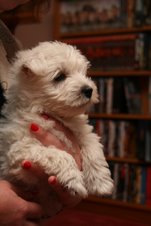
We have three animals currently on the 'naughty step' but I have not photographed them so I will post a selection of nice pics and catch you up with what they are about as we go along - the first 2 though are a Buff Orpington chick and a Jersey Giant (black) at 3 weeks.

First customer for sitting outside the headmaster's office to await his fate is Blue the Cat, who manages to hook a passing swallow out of the air as it dives down and into the Tígín where they are currently nest building. I can only imagine that the swallow failed to adjust his eye sight to the dark inside on a bright morning; they are usually well able to avoid our cats. Luckily I saw him out of the kitchen window playing with the victim who was patently still alive. He would not yield the bird to me, but his 'Mum' (Liz) has a more menacing way of scruffing the cats and growling "MINE!" at them which makes them drop the capture. Liz scooped the swallow up, shaken and not stirred and we laid it in a tea-towel in the only place where cats fear to tread- the Goose House with its two broody geese. It was still alive by lunchtime and then gone by mid afternoon and we have since regularly seen both 'our' pair whizzing about as normal so we assume this time he got away with it and , we hope, learned to be a bit more careful coming through the doors of the Tígín.

Next up, our bitch-pup, Poppy, now 11 months old, so old enough to KNOW BETTER. She has adopted the habit of chewing wetly, or just sucking, the crotches of any of Liz's clothes - knickers, jeans, pyjamas. She does not always actually damage them, just renders them unwearable till they have been washed. She never touches mine, just occasionally has a chew on my sandals, but never clothes. Naturally, we are trying to cure her of this annoying habit. Chunter chunter.

 Our final customer today is the hen we are now calling 'baldy' whom we believe, in the absence of any evidence to the contrary, may have given up laying eggs for good. You'll recall that we had a eggy hiatus and changed the feed for an organic, Pedigree Petfoods product. This seems to have sorted the soft-shell problem and the lack of eggs, so that we now get 2 good eggs most days but ONLY 2 from three hens. We watch closely and have seen that the other two hens slope off from the rooster every morning and lay their eggs in the nest boxes, but 'Baldy' (so named because she gets William's 'attentions' so often that his spurs have worn away some of the feathers across her back) is never missing. Mentor Anne tells me that it is almost unheard of for a rooster to bother 'treading' a barren or infertile hen, so she has advised me to beat the bounds, searching all the hedgerows, nooks and crannies, where I'll almost certainly find a huge stash of eggs (Simon says this normally happens in winter as the vegetation dies back; that's when you find the caches). I have had a really thorough search today though, rummaging through nettle patches and ground elder with a hoe, and I am blowed if I can see any. So, unless she gets her act together before the new babies reach PoL (Point of Lay), the stock pot looms for her.

Meanwhile, in happier news all 8 of our chicks have survived to 3 weeks old. This is fairly unusual, apparently, you normally lose a few. The horses are also doing well, enjoying their new 'rushless' field and learning to come to us on call to earn a Polo mint treat. Liz has not yet done her official newt survey but by coincidence I found one swimming in the goose-drinker this morning. It's a very egg-loaded female (says Liz) and was probably looking for a suitable pond, which the drinker is NOT, having vertical plastic sides. We rescued it to a more suitable 'pond' and Liz was able to break out the official forms and record it for our 10 km square (grid ref M68). We got a nice reply from the Official Irish Wildlife Trust website to say that this was a 'New Record' for M68, smooth newts never having been recorded for this square before. This actually makes it pointless for us to survey Bob's pond, as the box has been ticked, but we will do it anyway and they can have a 2nd tick if we find any.

Today we collected up our latest addition, the meat-breed doe rabbit, Goldie. She came from Mentor Anne's 'stable' and is pregnant to Anne's Californian White buck, Bobby. This might get confusing - we have John Deere Bob, our friend and neighbour, Bob the mini-Shetland horse and now Bobby the potential Father to Goldie's 'kittens', who, if all goes well, are due around June 13th. We will be over-run with baby animals if we don't watch it. I do not want to be counting chickens, but we have the potential now for goslings on 22nd May, baby rabbits from Ginny and Padfoot on 2nd June and now Goldie.

Oh - and the other pictures? In order, the three horses having a rest, some horse product on the rhubarb, that newt, Goldie and some pear blossom just opening now on a Conference Tree we had as a gift last summer from Steak Lady.

That's it for now.

Saturday, 11 May 2013

Down the Rushy Glen

Keen to stop all this lovely rain water going to waste, we decided that it would be a good idea to invest in a couple of the huge (1010 litre) water 'butts' that everyone uses round here. These could be a reservoir for refilling the pond and also for irrigating the poly tunnel but also to supply drinking water to a drinker on our East Field for the horses and soon the sheep. These come from Coca Cola in Dublin originally and are for sale at anything from about €45 to €75 but have lately been in short supply. We have clubbed together with Mentor(s) Anne and Simon who can possible get them, delivered, at the €45 end of the scale, but their supply has dried up, so we nipped out and got a pricier one locally, collecting it with the trailer. We want to start accumulating water now so that we have a full tank by the time we finish the pond.

We have rigged up a bit of 2nd hand guttering (also, partly, from Anne and Simon) to collect the water from the car port roof. These tanks are only made from plastic and aluminium, so are nice and light when empty, so that Liz and I could easily lift it between us and wrangle it into position. After a bit of rain over night it is already 5-6 inches deep in water. We find that we are now ahead of the curve. Keeping your rain water separate from the sewers is the LATEST THING in eco-warrior terms and is called "Blue-Greening". Get us!

Look at any picture of the East Field we have printed up to now and you will see a mess of rushes tall enough to tickle the bellies of sheep and horses, tall enough to hide them if they lie down. These grow easily here-abouts as soon as the land is allowed to get wet and neglected. The cattle will not eat them, so they just get worse and eventually take over the fields, rendering them useless as pasture unless the farmers bother to spray them and mow the fields; not many do unless pushed, as in this year, by serious shortage of fodder, or forced contractually by their landlords.

We do not want to be negligent managers of our grassland, and the sight of all those rushes was preying on our minds. I was going to have to hire a brush cutter for a day and have at them. I was talking about this to our fencing guy, Paul M and, generous guy that he is, he offered me the lend of his meaty, 'professional' strimmer to try out. This turned out to work like a dream, scything through the clumps like a knife through hot butter. The field is one and a half acres, so it took a few hours (about 4), some replacement "string" (tough nylon cord in the strimmer head) and 4 tanks of petrol but it looks very good now.

The rushes were sprayed last year by Mike the Cows when he was using the field for his cattle, so they are possibly weakened, and some have grass growing among the rush root-plate, but the theory is that the soft rush regrowth can be eaten by horses and sheep which should finish the tufts off and grass will win the grazing war in the end. Our pasture will be like a rush-free garden lawn (!). Liz fancied a go at this strimming game so we kitted her out with her best pink wellies, and my Husqvarna chain-saw gloves, helmet, mesh visor and ear defenders and she was away. It is not on record who she was thinking of as the whirling string zipped through the tufts sending a spray of mashed rush fibre flying in all directions and the decapitated stalks whipping away in the wind.

Meanwhile we have sought (and gained) permission from John Deere Bob to go newt surveying on the little pond at the bottom of his bank field. We explained that we might have to go look during daylight but also at night with a torch. Looking a bit twinkly eyed at Liz as if calculating how much he might get away with as a tease he warned us to be wary of the faeries in the dark down there as there were known faerie-forts (raths) near that water. I am remembering Pud Lady's little rhyme from when we were all small

Up the airy mountain
Down the rushy glen
We daren't go a-hunting
For fear of little men.......

Thursday, 9 May 2013

A Little Drop of Rain

Coo! When it decides to rain round here, there's no messing about. Buckets came down overnight, hammering on the roof and windows, blasted against the front of the house on a strong southerly wind. From no puddles and reasonably dry last night despite a bit of rain on Wednesday morning while we were fencing, I woke up to the biggest puddles I think we have had so far. The local lough, Lough Feigh has trebled in size overnight from a raggedy ribbon of wet between rambling beds of rush and reed, to an impressive expanse of open water. The reed/rush beds are submerged and the 'banks' are now grass fields further out. The local river, the R. Lung has risen from showing a yard of exposed bank, to brim full. A pipe-drain emptying into it under the bridge with a gurgling splashy drop of 4 feet is suddenly half submerged so that the water joins the river on the level like a tributary stream.

My part-dug pond was an almost complete sheet of (muddy) water. I will not be digging any pond today; that's for sure, but it is comforting to know that the pond is pretty level and is also in the right place in terms of catchment area. We are actually on top of a low hill here so nowhere is going to be that 'right' but we do have a small hollow centred around this part of the garden, partly because of the TK Max and TK Min apparent habit of bulldozing all the top soil off the yard and piling it up in heaps against our western boundary hedge. John Deere Bob tells us that many locals see topsoil as an expensive resource worth stock piling, so if an area was to be used for storing bales or farm machinery, then the soil (they say it "sale" here) would be scraped off. The result here is a big dam of soil along our boundary which prevents rain running off so we have a bit of a 'bowl' in which to construct the pond.

There are other dints and hollows which collect nice puddles much to the delight of the gander who splashes about dipping his head and neck under the surface, then rearing his head to shower the water backwards across his back, wings and tail. Suddenly he will honk excitedly and charge across the puddle splashing his feet down like a child playing in his wellies. We guess he wishes his womenfolk were not focused on being broody and might come out to play.

It's comforting to know that at least it drains away almost as quickly as it arrives. Almost, but not quite. Within a few days of no rain these puddles will be gone and even the pond will be dig-able. The house and yard area are the same - one of the main driving forces to our building project was to get rid of the damp and let it stay away - ivy was stripped off the walls, rainwater goods and guttering were all replaced with new, down pipes were linked to gullies (4 inch pipes) under the yard to take water quickly away to the ditches we had had cleared by mini-digger. The septic tank got a huge pebble-filled pit dug just 'downstream' of itself to ensure 'water' cleared fast and efficiently. My veg plot got its ridges and raised beds and these were aligned up/down the slopes to help clear water and our use of mini-horses and sheep on the East Field is mainly about repairing the damage done by heavy cattle squelching up the ground into a non-draining foot print divot mess ("poaching" in grass management parlance). All the overgrown areas of this hectare have been cleared and turned, for now, into short grass to help drying out and run-off when it does stop raining. Our living-hedge wind breaks are nice, thirsty, willow.

Let it rain - we can cope!