|
The Hubbard chicks at 1 week get a first chance to feel the
warm Roscommon sun on their backs. It's the hottest day of
the year so far and they will come to no harm. |
Another week passes and there is still no sign of our AWOL turkey hen, Barbara so, naturally, we are becoming convinced that Brer Fox has had the pleasure. Yes, she MAY still be out there, rearing her chicks in the (now) cattle fields and a miracle may happen and she'll stroll back in with a little 'crocodile' of adolescents. Ah well. It does not matter physically for the moment as we will not be deciding whether or not to replace the turkeys any time soon. Emotionally, of course, we will miss them - they were an intriguing and fascinating couple to have wandering about and liked to home in on us if either of us were out gardening or sitting by the pond.
 |
| Misty morning across the bog to our North |
No babies either yet for the geese or any of the chickens. For our fix of chicks, then, we only have those Hubbards, 7 days old today. We are always impressed by their speed of growth and development - if you want photo's of that clichéd image of the spherical ball of fluff body with two legs at the bottom and a head at the top, then you really do have to get there in the first 3 days. By day 4 and certainly by day 7 they are already growing taller, with an obvious neck and pin feathers are sprouting to give them definite wings among their side-fluff.
 |
The Captain's table? Our former rooster re-appears coated with
a rough and ready BBQ sauce but even though we slow-cook
him, we'd both admit that he was a tough aul' bird. |
Of course, in commercial terms, they are not fast growing at all. Free range, they take a good 100-120 days to reach good carcass weights. Commercial broiler birds housed indoors and grown on a diet of growth promoters under controlled day-length can be harvested at more like 40 days, still covered in chick-fluff. As I understand it (and I'm no expert), those would not be Hubbards - our Hubbards are bred (designed?) to do well under commercial scale free range or organic conditions. We are actually slowing them down by giving them fully free range conditions, too much exercise and a diet supplemented by worms and grubs scratched from the ground.
 |
| Breakfast in the early morning sun. |
Meanwhile in other 'babies', our little gilts continue to charm and delight us. They are almost 4 months old now and suddenly seem to twice as long as the day they arrived. We were delighted recently to be visited by the couple who did my pig-training down in Tipperary 3 years back and with whom we have stayed in touch and would now call firm friends.
 |
| I love the light under new beech leaves. This is in the pig run. |
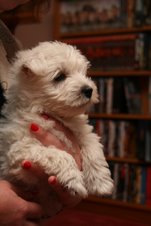
They were in the area, by coincidence, to collect a puppy and recognised the name of the village as being one I had mentioned. I was delighted to show them around the place and particularly to show the two pigs to Alfie. He pronounced them fit, well and a credit to us. "I love to see HAPPY pigs" he said as the our pair scampered round our feet deciding whose footwear to chew first.
 |
This lovely foal and mare combo (plus the
other filly behind) have moved in next
door as lawn mowers. |
I should add that it's not all sweet perfection, however and a nasty incident between dogs and pigs soured relations between these species for a while.The 3 westies were enjoying their half hour off-lead exercise and gazing through the fence as the piglets wandered over to sniff the dogs.
 |
This pigmy shrew was only slightly chewed by the cat.
Liz rescued him and I got a quick chance to take his pic
before we released him to the safety of a log stack. |
Faster than I could react, a pig had got too close, a dog had thrust his head through the sheep wire and grabbed a chunk of pigs ear. The hullabaloo of squealing and barking had me sprint over adding my own roar to the cacophony. The dog let go the pig and the pigs both ran off to hide in their ark while I reprimanded the dogs. I went in to console the pigs and was relieved to find that the ear was only a bit bitten, not actually torn, though it was bleeding quite impressively. First-aid for piggies, anyone? Luckily, no lasting damage done though I note the pigs stay well clear of the fence now when the dogs are about.
 |
| Small white (?) on dandelion. |
The 365 photo project chugs on coming to the end of its 4th month. Last week the 'Tidy Towns' group in the village wanted to take part in the (national) Bio-Diversity week, so the 365 photographers were asked to specialise in wildlife related stuff. I have had some fun trying to give them a good choice of subjects and not just the cute and fluffy - slugs, snails, dead wood and so on have all featured. I am not sure I am 'allowed' to be pleased that Blue the cat caught a timely shrew which Liz rescued and then, while it was still frozen in shock and a-trembling, take its picture before it suddenly came to, realised its good fortune and scampered for cover. Sensible shrew.
 |
The long border at Strokestown, still a bit
'early summer' and green. Pic by Liz. |
In the extra-curricular area, we found out about a plant sale happening in our favourite guest-visit destination, Strokestown House. This was not Strokestown selling stuff from their brilliant walled garden, but merely acting as host to a dozen or so traders. However the traders were excellent and the plants were in gorgeous condition and very reasonably priced and, included in the €5 entry fee to the 'fair', was a chance to walk round the walled garden. Despite showers, that was us sorted for a very enjoyable Sunday morning.
 |
| Strokestown House walled garden. |
For not too much of a dent in the wallet, we came away with a good haul thanks, mainly, to one of the traders doing a "6 plants for €20" deal. All perennials needed (and longed for for a while - Ireland is not a natural gardeners' country and the Garden Centres are few and far between and not well stocked with unusual stuff) for our big raised bed. Some inspired by the lovely plants growing in big drifts in the walled garden - the blue Centaurea particularly.
 |
Admiring the old equipment in the restored working area.
This a lovely old Allen Scythe |
We shipped a couple of tall clump-forming grasses, that blue centaurea, a nepeta (cat mint), a sedum, salvia, Solomon's seal, a hemerocallis (day lily) and a frothy-flowered thalictrum (I think) with granny bonnet leaves (aquilegifolia). With all this haul home we go into designer mode placing them out on the bed in their prospective positions to see if it works.
 |
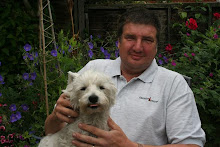
| The gardener - muddy knees to prove it! |
We are still enjoying the fact that this is not our overcrowded garden in Faversham. By the time we'd finished there we had no space to plant things we'd buy so they sat in pots for too long, or some other plant was evicted to make room. Here, we have 2.5 acres, so we can still buy 'thugs' that will take over space - mint, the Solomon's seal etc or will happily self-seed. We'll get there.