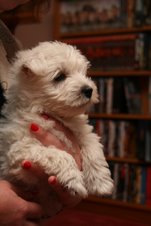
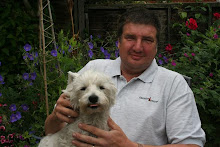
With Christmas and the New Year all done, dusted and packed away we start to feel like we should be looking forward to the new season, Spring, new stock and all the fruit, flowers and veg leaping into action. In the previous post, I wrote that we were waiting on the splatter of tiny feet with a batch of 7 duck eggs in friend Sue's incubator. That has all now happened with three lovely healthy ducklings hatched over the 6th and 7th, collected by us on the 8th and now going through the first "brood box" week.
We use a semi-transparent plastic crate for this (well, a series of crates of increasing size to suit the growing babies) and our "electric hen" (warming plate) and we feed chick-crumb with plenty of water on the side (as these are ducks and they prefer their food dibbled in the wet) plus, for the first week, finely mashed hard boiled egg with the shell finely chopped and mixed back in.
 |
| Curiosity might not kill the cat in this case! |
We are reminded each time we do this, that ducklings do not naturally creep under mother's skirts (if she is swimming, they'd submerge!) but climb instead onto her back. The ducklings are the same with the electric hen and you can generally find them all hopped up on top in a huddle. As I write this they are 3 days old and thriving. They have good appetites and have quickly learned about food, water and keeping themselves clean. You can not let them out onto the water properly till they are about 3 weeks old, as their preen-glands have not yet developed or started to produce the water-proofing oil for their feathers. In nature their mother would have oiled them up in the nest.
 |
Hopefully the parents of this years piglets, pregnant sows
Iris and Plum. |
I may also have mentioned that we had been in contact with our piglet-breeder, a guy called Adrian who farms over near the town of Boyle. You may recall that although last year's piglets came from a chap called Dermot in Wicklow, 3 hours drive away, we did not have to make that drive ourselves. Dermot was coming most of the way here and if we'd meet him in Boyle, we could get away with a half hour drive and a bit of piglet-wrangling in Boyle's market car park.
 |
Half grown piglets at Adrian's place.
These are about 5 months old |
The reason Dermot was up here was to collect a sow from Adrian and take it 'home' to get it pregnant by one of his boars. That sow and another have now produced a couple of litters each and are pregnant again (pig-people like to keep their sows in pig as much as possible because if you 'rest' them they can be a devil to get back on heat). One is due this month and the other in March. We hope to take 2 gilts from the January litter, which will be weaned after 8 weeks, in March. Sue is hoping for the same. Obviously it is all in the lap of the gods at present - as with humans there is no telling whether they will successfully 'farrow', or when or how many piglets might result and how many survive to weaning. Litters can be as big as 15 piglets or down in the 5s. All we can do at this stage is wish them all luck and pray hard.
 |
| Polly with last year's twin lambs in March (2016) |
In the sheep department I had been getting a bit concerned at a stiffness or lameness I had seen on a couple of cold damp mornings in our oldest ewe, Polly. At 9 years old, Polly is at least 5 years older than any commercial 'serious' sheep farmer would keep a breeding ewe. They are allowed a couple of seasons and then generally turned into mutton at 4 years old. Well, every day is a school day with livestock and I now know a bit more about shepherding after seeking advice from Mayo Liz, the person who we are sure knows more about elderly sheep than anyone - she supplied us with Polly (and Lily and Myfanwy) in the first place aged 7 and still has some of her other ewes at 13 years old.
 |
| Mineral Lick for sheep. |
Every time I see a lame sheep, I have been reaching for the foot-trimming shears and paring away any shaggy edges of 'toe-nail' I found. Well, apparently you should not always do this - restrict foot trimming to 1 or 2 times a year. Sheep get over most foot problems much faster untrimmed. Then, too, I have learned all about "The Mineral Bucket". This I possibly should have known because way back when I was a student doing a bit of milking, I remember the cattle had access to great big salt-blocks to lick. Also I know, in theory, that those goats you see creeping out along the sheer vertical walls of dams in Europe, clinging on by the edges of their toe-nails to the joints in the stone, are doing it to get to the salt deposits encrusted on the wall by water seeping through the dam.
 |
| Polly beats Myfanwy to the mineral lick. |
Be that as it may, Mayo-Liz always gives her sheep mineral licks in Winter because the quality of the grass falls away and they might lack minerals in their diet. This might be why Polly is getting stiffness in her joints, especially if she is starting to lose teeth through old age. The 'lick' is a mix of minerals and salts thickened up to a very stiff, clay-like consistency with molasses and is dark brown in colour. All the sheep love it and the older 3 (born at Mayo-Liz's) all piled in with delight. It was like an old friend! They lick and nibble and try to rasp away at the stuff goo with their lips, teeth and hard-pad (top jaw) trying to beat all the competition off till they have had enough. The bucket is now a stop on their endless circuits of the field. I THINK I can detect a new spring in Polly's step but that might just be fond imagination.
 |
| Not so chatty now, Mr Fox? |
Finally a bit of fun to close off the fox story. We are fairly sure that we have solved that problem for now with our shooting of the boy-fox back in November and our new habits of keeping the birds in if we are both off site seems to have driven off the older girl (plus my man-with-shotgun from Jan 2015 has shot 2 other animals recently on his own place). Well, I thought it might be fun and cathartic to take a stuffed toy fox to our first archery club session on Sunday - we are for ever shooting at coffee cups, balloons and other bits of junk when we get bored with shooting at the official targets.
 |
| The only good fox? |
So it was - we sat Brer Fox on a little wire hoop in the target at 40' range. I was actually the first to hit him and with a very lucky first arrow (right in the mouth) but he was soon getting peppered by all and sundry and starting to leak stuffing. Ah well. All good harmless fun. I should quickly re-assure my readers who do not know this story or about archery, we would not dream of taking a bow and arrows to the real thing. It is illegal throughout the British Isles to hunt any animal or bird with a bow and arrows. I am told you can still hunt that way in parts of Europe and USA but have to use the very powerful "compound" style bows and even then it has to be under license.
 |
| Towser. |
So there you have it. 2017. Bring it on.