#TheBeastFromTheEast That is the new name given by the trendy Twitter 'meteorologists' for this blast of cold air coming clockwise round a high pressure system sitting over Scandinavia. Yes, we've enjoyed "weather bombs" and even "Sting Jets" and all manner of hell-and-high-water that hadn't been invented when I was studying Meteorology, but now we have a 'beast'.
 |
The bog land to the North of us looks a bit bleak on a
frosty morning |
We know this eastern flavour of wind well, of course, especially its NE variant, having spent 20-odd years living on the NE Kent coast in Faversham, where it'd come charging across Nagden Marshes. Elizabeth used to call it her "favourite" wind and we were pleased that our house faced into it so that the terrace out back was relatively protected by the bulk of the place. Before that, I lived in the Lincolnshire Fens which are also NE facing and with way fewer houses to hide behind.
There it came howling across the North Sea picking up a bit of instability and moisture in preparation for snow and drifts. The locals joked that it was a "lazy" wind looking at you all expectantly, waiting for you to ask them to explain the 'lazy'. "Too lazy to go round you - it goes straight through ye!" How we laughed.
 |
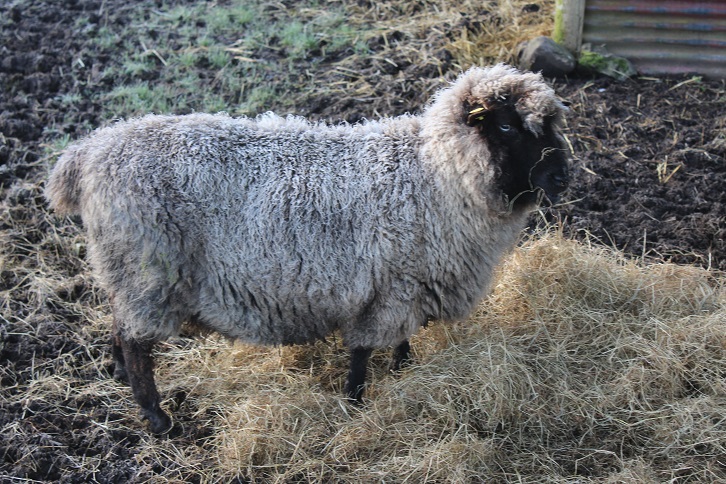
Polly is looking most promising for my next lamber. Is she
waiting, like her Sister, for the worst possible weather? |
It's an ill wind, though, that blows nobody any good. It may be cold and send you running back to coats, gloves, hats and scarves for the livestock jobs, but in my reckoning it is beautifully drying. The weather maps are cloud-free lately and we've had no rain for days. All my puddles are gone and the small patches of bare mud that remain are sticky rather than wellies-sloppy. Crocs are once again the footwear of choice. I am not sure how dry we will stay. The wind is currently SE and not yet backed through pure East to NE but the forecast has weather warning of snow in the East and South East of the island. We may get some.
 |
Two late-hatch poults came of age and decided to be roosters.
Bad move lads. They are now rather scrawny frozen
oven-ready carcasses. |
Meanwhile, the ewe 'Polly' seems to be lining up to be my next lambing event. She is working her way through the signs - #1 "I want to be alone" and now #2, starting to bag up. She is not ready for sign #3, declining breakfast, though and not really due till more like March 5th (though you never can tell). So she gave me a fright this morning when she was not in the queue for crunch.
I could not see her at all and worried that I'd have to go seek her out in the curves and dips of the field in case she had a problem. But no. By the time I'd gone to get the bucket of grub, she had rocked up and was baa-ing hungrily. No lambs yet then, Poll-Woll. The other two ewes (Rosie and Myfanwy - all these ladies are named after female characters from 'Under Milk Wood') are keeping me waiting. They look broad enough in the beam to be pregnant and Rosie is maybe, just maybe, starting to bag up but if they are, they are playing their cards close to their woolly chests.
 |
| Book of the Month! |
Finally, I have discovered a new author of those year-round, starting to small-holder type books I love. This by an American lady, Jenna Woginrich who has jacked in the 9-5 office job and bought a small farm in the 'sticks' (Hudson River valley, Washington County). I love this book. Jenna has a lovely 'voice' and a very pleasing way of explaining what she's at (not laboured at all, she assumes a good level of knowledge already). Also a lovely way of expressing the joy, freedom and excitement of the lifestyle and her delight at actually being able to have the livestock and do the tasks. "I milked a goat! Me!" The book is also superbly illustrated (by one Emma Dibben). It is pure joy to own and to read. If I had a 'Book of the Month' thing going, this one would be a definite winner.